
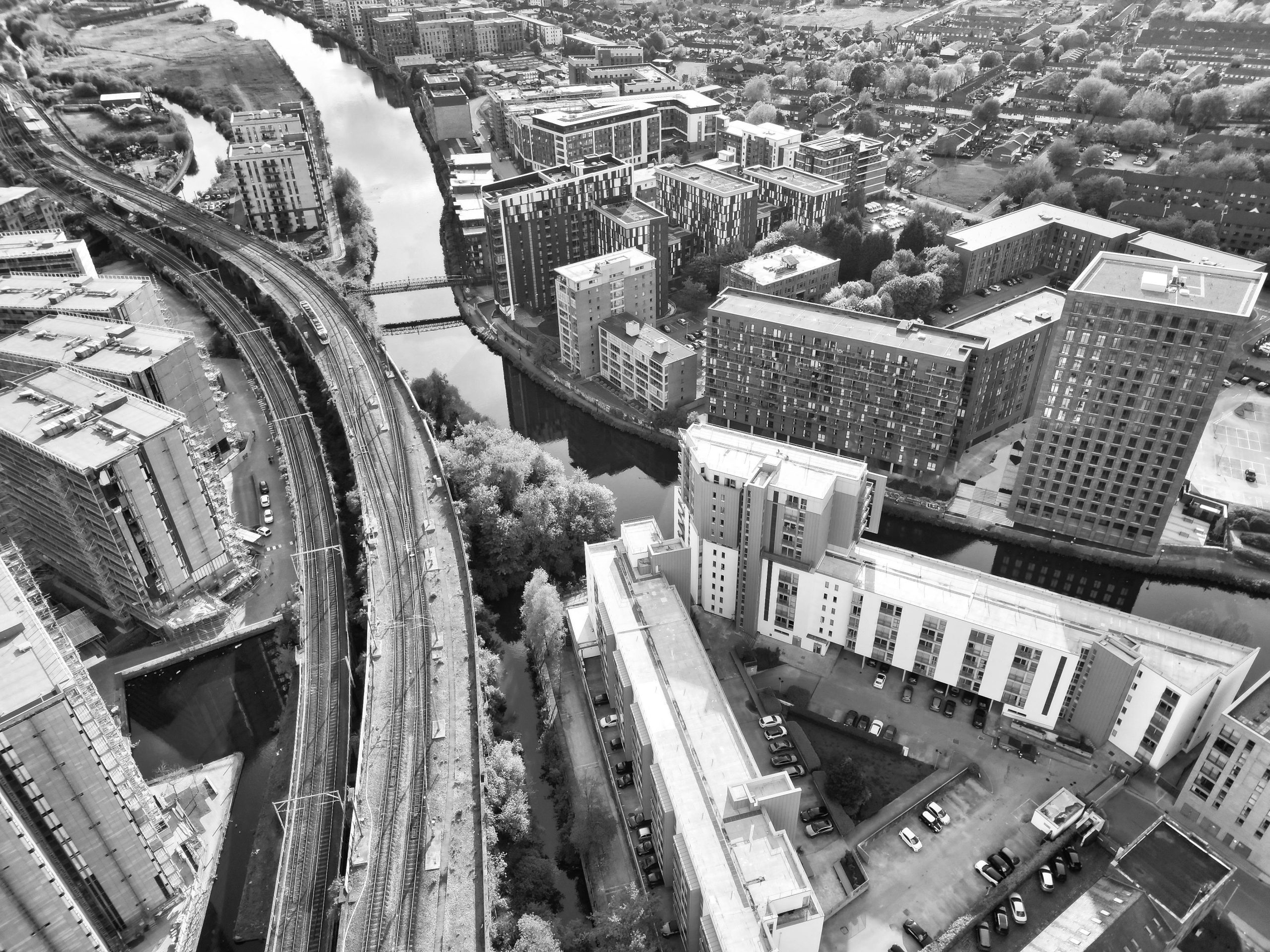
International migration figures have been making the headlines over the past few days, but I’ve been taking a look at migration within the UK – in particular at what’s happening in my home city of Manchester. Here’s what I’ve found.
More than 11,000 more people moved away from Manchester last year than moved to it, according to ONS estimated data on internal UK migration – the third highest net loss of any local authority.
Birmingham had the greatest net loss, of more than 16,000, while Newham in London lost more than 15,000 – with London as a whole losing more than 128,000 people to the rest of the country. The post-Covid exodus from the capital does not seem to have ended.
Figures for the whole of the UK – albeit with Scotland and Northern Ireland listed in their entirety, rather than broken down – are available in the table below, which you can re-sort and/or filter via search.
The overall picture is very clear – people are continuing to move away from the major cities and to more rural areas, with spots like the East Riding and North Yorkshire, Cornwall and Dorset seeing the greatest net rises.
The “from” seems to matter more than the “to”: every region of the UK saw a modest net increase except for London, Northern Ireland (where numbers stayed essentially level) and the West Midlands (thanks to Birmingham’s huge drop). It’s a trend that’s been going on for more than a decade, although the pace has only picked up in the last few years.
The below has internal migration figures for all UK regions since 2012 – you’ll see how drastically London is out of step with the rest of the country.
In Manchester the gap is widening: last year was the first (since at least 2011) with a net loss of more than 10,000. The gap is also growing, albeit more modestly, in cities like Liverpool and Leeds. Birmingham has been losing people on a huge scale for years.
Where do Mancunians go?
As you’d expect, the most common destinations for those leaving Manchester are neighbouring areas – 7,000 to Salford, more than 4,000 each to Stockport and Trafford. Here’s the full data on that:
But here’s the question: how have those numbers changed over the years?
Not very much – to a possibly surprising degree. People leaving Manchester have distributed themselves around the country according to pretty much the same pattern since 2012, even as numbers have risen, as the graph below shows.
The first chart has actual numbers of people leaving, and the second shows the proportions moving to different parts of the country:
That very undramatic second chart demonstrates just how little change there’s been in where residents leaving Manchester have chosen to go; the percentage staying in the Greater Manchester region has remained in the low 40s since 2017.
The sudden rise in 2017 itself is intriguing; it likely represents the first time city-centre rents really came to a head and thus forced more people to move to the suburbs. And, while I’m only speculating, it seems likely that some of the developments around the city-region – especially the improvement of the public transport system – made those surrounding boroughs more plausible places to move to.
But in a sense that just makes it more surprising there’s been no further increase since then, given that the transport system has continued to expand (it’s now the Bee Network), and there is a region-wide housing strategy too.
As things stand, such is the scale of the exodus from Manchester that Greater Manchester as a whole is losing people, too – not because people are leaving the suburbs in great numbers (aside from Manchester, only Oldham and Bolton lost more internal migrants than they gained) but because the drain from Manchester is simply so great.
Here are the figures for the city-region as a whole, with a few comparators:
(A side note, and a topic for another day: look at all those people moving to Lancashire!)
The bigger picture
It’s no surprise at all that people are leaving Manchester, simply because big urban centres always lose a lot of people to internal migration.
And it’s similarly common that those places continue to grow in population nonetheless, because of international migration. That’s exactly what’s happening in Manchester, as the ONS’s overall population estimates show. So it’s not like Manchester is shrinking.
But given the development of “Greater Manchester” as a concept over the past few years, and the combined authority’s impressive efforts to connect it all together, you might have expected a rise in the proportion of people choosing to stay within the city-region, when – as they inevitably are – they’re priced out of Manchester.
Sources and notes
The feature image shows Salford (left) and Manchester (right). Altaf Shah via Pexels.
All the data is from the ONS; my analysis is based on the 13 available datasets from 2012 to 2024. Working available via GitHub.
Leave a Reply